articles and writings
INSIGHTS ON LEADING TEAMS
Practical thinking on scaling teams, leading under pressure, and making hard decisions cleaner.
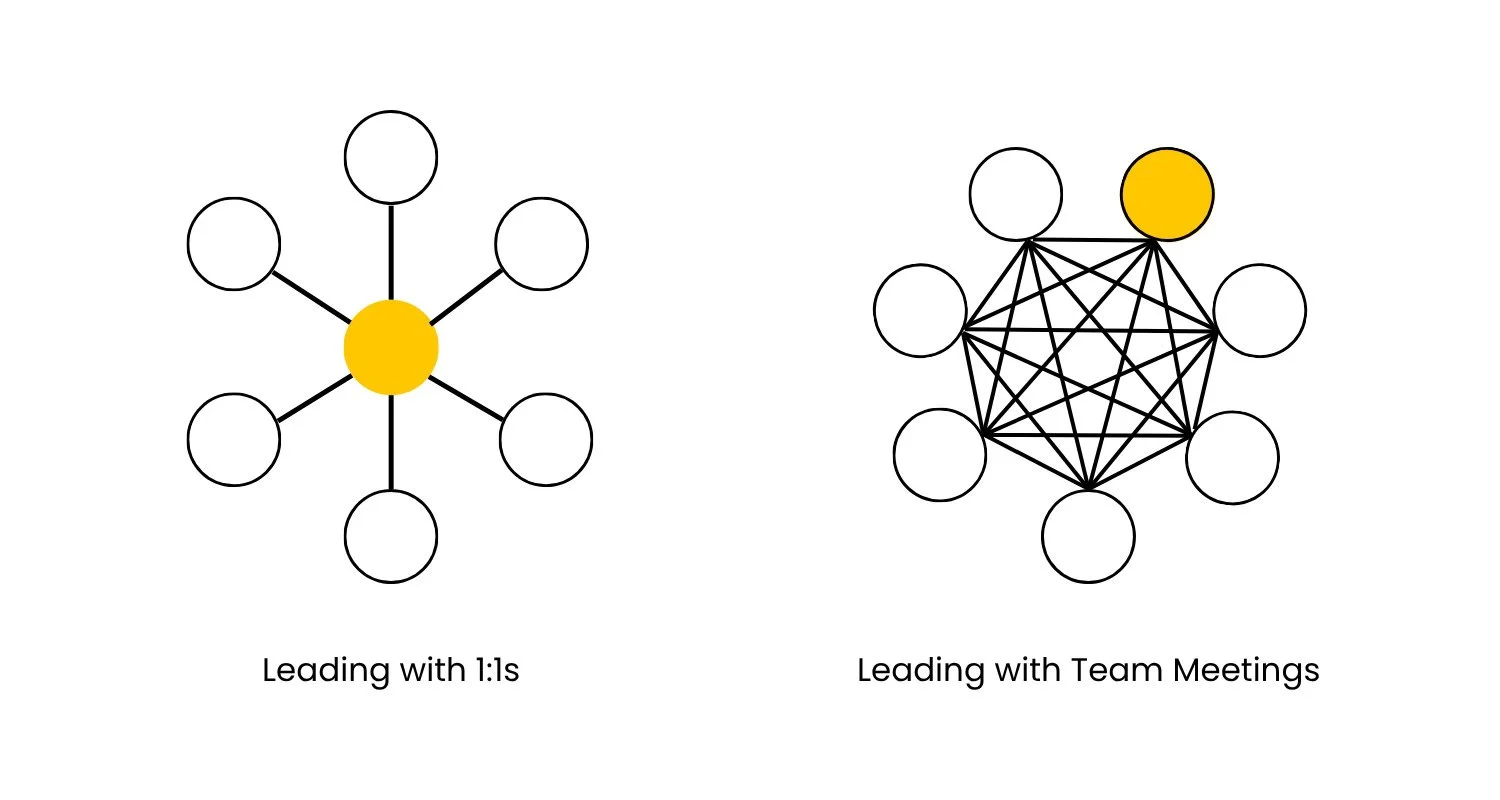
Build Team Capacity by Cutting 1:1s (5 mins)
When leaders spend most of their time in 1:1s, they often become the hub through which everything flows, unintentionally creating dependency and slowing the team down. Building real team capacity means stepping out of the center and designing conditions where the team can think, decide, and move forward together.

Reignite Startup Hunger, Focus and Speed with Momentum Meetings (3 mins)
As companies grow, speed and focus often fade not because people stop caring, but because the system no longer creates fast, aligned cycles of decision and action. Momentum Meetings restore that startup hunger by giving teams a simple weekly rhythm that sharpens focus, surfaces blockers early, and moves work forward together.

The Essential ‘Challenger’ Role on Your Team (3 mins)
When leaders stop hearing “no,” it is rarely because everything is working, it is because the system no longer makes it safe to challenge authority. Introducing a Challenger, whether as a rotating role or a built-in meeting practice, creates the conditions for better decisions by surfacing risks early and breaking the echo chamber before it becomes costly.

What to do when Feedback isn’t Landing: Low Caring & Motivation (3 mins)
When feedback does not land, the issue is often not clarity or capability, but motivation and perceived threat. Leaders who learn to work with individual motivational currencies and reduce social threat create the conditions where feedback can be received, integrated, and acted on.

What to do when Feedback isn’t Landing: Lack of Clarity and Capability (3 mins)
When feedback does not land, it is often because leaders are asking people to read their minds or perform beyond their current capability. Making feedback observable, specific, and paired with real support allows willing people to grow into the role rather than be quietly judged for not meeting invisible expectations.

Run a Pre-Mortem Before the World Does It for You
In a volatile, uncertain world, leaders cannot plan their way out of chaos, but they can design teams that are ready to adapt when plans collide with reality. Running a pre-mortem builds collective foresight, surfaces hidden risks early, and strengthens a team’s ability to respond calmly and intelligently when the unexpected hits.
Want more insights like these?
Subscribe to my Substack for practical leadership thinking delivered to your inbox.